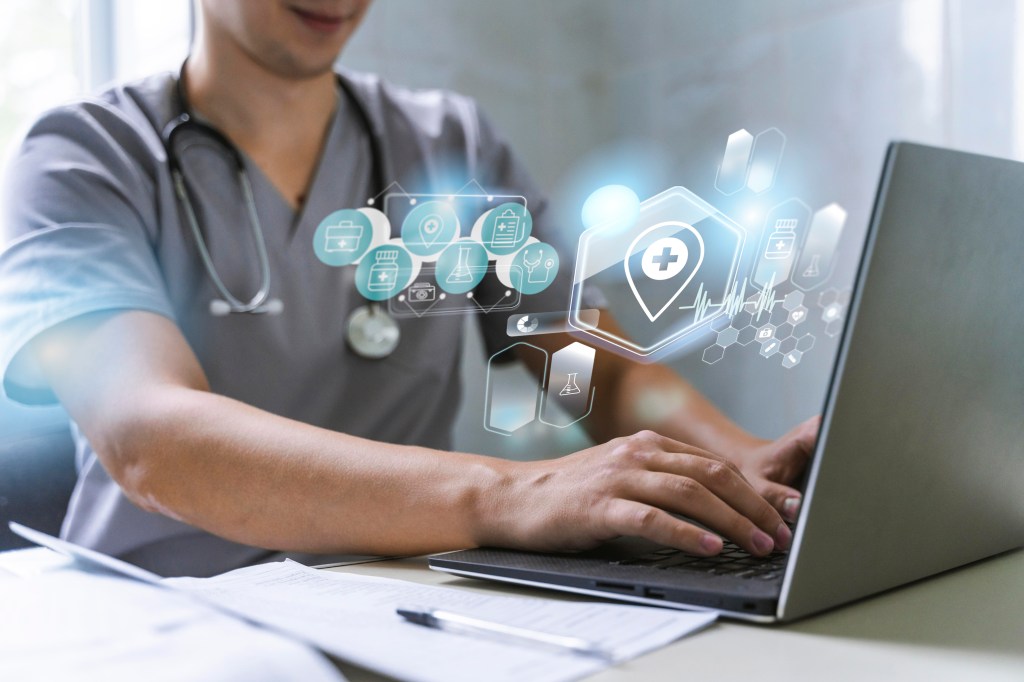
In recent years, telehealth has emerged as a transformative force in healthcare delivery. Accelerated by the COVID-19 pandemic, this mode of remote healthcare has grown from being a niche service to a mainstream solution. Telehealth combines telecommunications technology with healthcare services, enabling remote diagnosis, consultation, and treatment. Its integration into modern healthcare software development is reshaping patient care, improving accessibility, and optimizing operational efficiency.
This blog explores how telehealth is revolutionizing healthcare app development and Hospital Management Systems (HMS), underscoring its crucial role in modern hospital management software.
Role of Telehealth
Telehealth, a cornerstone of modern healthcare, leverages technology to bridge geographical gaps and enhance patient care. By employing digital tools like video conferencing and secure messaging, healthcare providers can offer remote consultations, monitor patient health, and provide timely interventions. This revolutionizes healthcare delivery, making it more accessible, efficient, and cost-effective. Telehealth solutions, such as Hospital Management Systems and Healthcare App Development, play a pivotal role in streamlining operations, improving patient engagement, and fostering better health outcomes. Healthcare software development is essential in creating these telehealth solutions, ensuring seamless integration with existing healthcare systems and optimizing patient care.
Telehealth and Healthcare Software Development
Healthcare software development has adapted significantly to meet the growing demand for telehealth services. Telehealth platforms rely on robust, secure, and scalable software that integrates seamlessly with existing healthcare infrastructures. Developers must focus on several key aspects:
- User Experience (UX): User-friendly interfaces are crucial for both patients and healthcare providers. Telehealth software needs to be intuitive, especially for patients who may not be tech-savvy.
- Security and Compliance: Telehealth solutions handle sensitive patient data, requiring adherence to stringent regulations such as HIPAA (Health Insurance Portability and Accountability Act) in the U.S. and GDPR (General Data Protection Regulation) in Europe. Ensuring data encryption, secure logins, and regular audits is paramount.
- Interoperability: Telehealth platforms must integrate with existing electronic health records (EHR) and Hospital Management Systems (HMS) to provide comprehensive care. This ensures that patient data flows seamlessly between telehealth services and in-person visits.
The future of healthcare software development lies in creating systems that not only facilitate remote consultations but also integrate with emerging technologies like artificial intelligence (AI) and machine learning (ML) for predictive analytics and personalized care.

Enhancing Accessibility through Healthcare App Development
Healthcare app development plays a critical role in making telehealth accessible to a broader audience. By developing user-friendly and secure mobile applications, healthcare providers can connect with patients remotely, offering convenient and efficient care. Healthcare app development allows for seamless communication, remote consultations, and real-time monitoring of patient health metrics, ultimately improving patient outcomes and satisfaction. Mobile applications are now central to delivering telehealth services, offering features such as:
- Video Consultations: Patients can consult with doctors from the comfort of their homes, reducing the need for travel and wait times.
- Appointment Scheduling: Apps allow patients to book, reschedule, and receive reminders for appointments, improving the overall patient experience.
- Electronic Prescriptions (E-Prescriptions): Doctors can issue prescriptions digitally, which can be sent directly to pharmacies or accessed by patients.
- Remote Monitoring: Healthcare apps can connect with wearable devices to monitor vital signs and provide real-time data to doctors, facilitating proactive healthcare.
These apps enhance patient engagement by providing easy access to medical records, educational resources, and communication tools. They bridge the gap between patients and providers, especially in remote or underserved areas where healthcare infrastructure may be lacking.
Integration with Hospital Management Systems (HMS)
A Hospital Management System (HMS) is a comprehensive software solution that manages various aspects of hospital operations, including patient records, appointment scheduling, billing, and administrative tasks. Integrating telehealth into HMS enhances its capabilities in several ways:
- Streamlined Appointment Management: Patients can book telehealth consultations directly through the HMS, reducing the administrative burden on hospital staff.
- Unified Patient Records: Telehealth consultations are recorded in the patient’s electronic health record (EHR), ensuring that all relevant information is available to healthcare providers, regardless of whether the consultation was virtual or in-person.
- Resource Optimization: By incorporating telehealth, hospitals can reduce the strain on physical resources such as consultation rooms and waiting areas.
This integration not only improves operational efficiency but also ensures that patients receive consistent and high-quality care across different touchpoints.
Benefits of Hospital Management Software Enhanced with Telehealth
Hospital Management Software enhanced with telehealth capabilities offers several significant benefits:
- Increased Efficiency: Virtual consultations reduce the need for in-person visits, allowing healthcare providers to manage their time more effectively. This also helps hospitals serve more patients without overburdening their infrastructure.
- Cost Savings: Telehealth reduces operational costs by minimizing the need for physical infrastructure and administrative staff. Patients also save on travel expenses.
- Improved Patient-Centric Care: Telehealth facilitates continuous monitoring and follow-ups, ensuring that patients receive personalized care. Remote monitoring tools allow doctors to track patients’ progress and intervene proactively if any issues arise.
- Accessibility and Inclusivity: Telehealth breaks down geographical barriers, providing access to healthcare services for patients in rural or remote areas. It also benefits individuals with mobility issues or chronic conditions.
Challenges in Implementing Telehealth Solutions
Despite its many advantages, implementing telehealth solutions within hospital management software and healthcare apps presents several challenges:
- Technical Infrastructure: Reliable internet connectivity is essential for telehealth services. In regions with poor infrastructure, this can be a significant barrier.
- Regulatory Compliance: Different countries have different regulations regarding telehealth. Ensuring compliance with local laws and international standards is complex but necessary to protect patient data.
- Data Security: Telehealth platforms are prime targets for cyberattacks. Developers must implement robust security measures, including encryption, multi-factor authentication, and regular security audits.
- Resistance to Change: Some healthcare providers and patients may be hesitant to adopt telehealth due to concerns about quality of care or unfamiliarity with technology. Providing adequate training and education is essential to overcoming this resistance.
The Future of Telehealth in Healthcare Software Development
The future of telehealth is intertwined with advancements in technology. Some key trends to watch include:
- AI and Machine Learning: These technologies can enhance telehealth by providing diagnostic support, analyzing patient data to predict health issues, and personalizing treatment plans.
- IoT and Wearable Devices: Wearables that monitor vital signs can transmit real-time data to telehealth platforms, allowing doctors to monitor patients remotely and intervene if necessary.
- Virtual Reality (VR) and Augmented Reality (AR): These technologies could revolutionize telehealth by enabling virtual physical therapy sessions or immersive medical training.
- Global Reach: Telehealth has the potential to provide healthcare services to underserved populations around the world, improving global health outcomes.
Conclusion
Telehealth, once a futuristic concept, is now a critical component of modern healthcare. By integrating telehealth into healthcare software development, healthcare app development, and hospital management systems like Hospital Management Software and Hospital Management Systems, we can create more efficient, accessible, and patient-centric healthcare systems.
Telehealth enables remote consultations, patient monitoring, and timely interventions, reducing the burden on healthcare facilities and improving patient outcomes. While challenges like technological limitations and regulatory hurdles persist, the benefits of telehealth, such as increased access to care, reduced healthcare costs, and improved patient satisfaction, far outweigh the obstacles.
To fully realize the potential of telehealth and transform the future of healthcare, stakeholders must invest in robust, secure, and user-friendly telehealth solutions.





 Healthcare App Development
Leave a comment